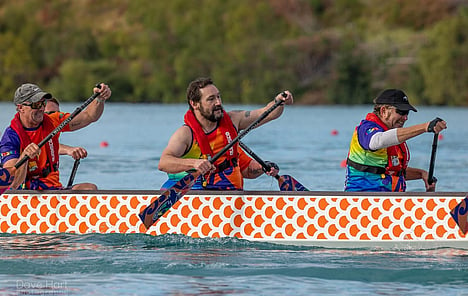
Supporting Breast Cancer Survivors in Dragon Boating
Many of you will remember Andrew from the IBCPC festival in New Zealand 2023 (yes, the one in the red heels), but he is also a clinical nurse consultant with a master’s degree in nursing. He has led many teams in a clinical environment and his particular field of experience is in vascular access and infusion therapy and he is also the lead examiner for assessing the dragon boat para-athletes, so he knows what he is talking about.
Breast cancer, uncertainty, and the journey into dragon boating
For many breast cancer survivors, joining a dragon boat team is about far more than trying a new sport. It can be a step back into movement, confidence, connection, and trust in a body that may feel changed by treatment.
That journey is rarely straightforward. Every survivor brings a unique experience and perspective, shaped by surgery, scarring, strength, fatigue, range of movement, and the uncertainty that can linger long after treatment ends.
That is why coaching breast cancer survivors begins with listening and careful observation. How does each person move? What does scar tissue mean for comfort and mobility? What feels possible today, and what still feels uncertain?
Some women may have played team sports before, while others are stepping into a boat for the very first time. Some come for fitness, some for friendship, some for recovery, and some simply to prove to themselves that they can.
A thoughtful approach means keeping things safe, simple, and supportive from the outset. Early sessions may focus on gentle movement, restoring confidence, and helping the body open again where scarring or treatment has caused tightness or hesitation.
Progress does not need to be rushed. With the right support, a survivor can move from tentative first strokes to becoming a strong and capable team member, and for some, even an elite athlete.
The key is recognising that each person’s pace will be different, and that uncertainty is not a weakness but a real part of survivorship that deserves care, understanding and respect.
It is also about empowering the coach to coach with confidence. When coaches understand the realities of breast cancer recovery, they are better able to create an environment where paddlers who feel tentative can still take part without embarrassment or unease.
Clear guidance, patience, and encouragement help make space for questions, small steps, and individual adjustments, so that every paddler can feel included, supported, and able to join in at a pace that feels right for them.
At its best, dragon boating offers more than physical exercise. It can create a sense of belonging, shared purpose, and hope.
For breast cancer survivors, which makes coaching not just about technique, but about meeting people where they are, understanding the complexity of their experience, and helping them discover what is possible next.