For Athletes & Teams
Getting back on the water
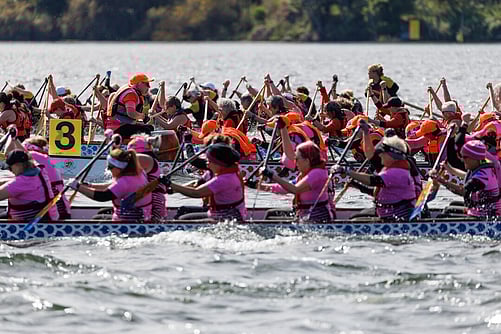
As the weather warms up and we start on water sessions again before the paddling season kicks off, there is an undeniable sense of excitement. We are all eager to hit the water, feel the paddle in our hands, and get back into paddling.
However, after a winter off or a break from structured training, it's important to understand that jumping back in without proper preparation can lead to setbacks. While it may seem tempting to dive right into long sessions, it is essential to recognise the importance of conditioning specifically tailored to paddling.
For any of you who see yourselves as recreational paddlers, this period of preparation is especially critical. While competitive paddlers hopefully will have been maintaining their fitness and building specific movement patterns throughout the off season, many recreational paddlers may not have focused on paddling-specific conditioning. And that is where the problem begins.
Why Sport Specific Conditioning Matters
When we paddle after a period of inactivity, our bodies are not conditioned to perform the intricate movements required for the movement patterns specific to paddling. This can quickly lead to fatigue, which is one of the most common causes of incorrect form. And when fatigue sets in, our body mechanics suffer. It is natural for our bodies to want to take shortcuts when tired, but that can result in poor paddling technique, reduced efficiency, and, in some cases, injury.
That’s why conditioning is key to maintaining form even as fatigue sets in.
The goal is not just to get in shape—it is about developing the specific movement patterns and strength needed to execute efficient paddling over long distances, during hard effort, or in challenging conditions.
Preserving Form Under Fatigue
Fatigue does not just slow us down—it compromises our ability to execute strong technique. Paddling requires coordination and the ability to engage the right muscle groups at the right time. Without conditioning, we tend to rely on smaller, less efficient muscles, which leads to form breakdown.
One of the most important things we can do during the off season (or before we get into the full swing of the paddling season) is train the body to recognise effort. This means targeting not only general endurance but also specific paddling muscles—particularly the larger muscle groups that are essential for generating power and maintaining boat glide. When these muscles are conditioned, we can paddle longer and harder without sacrificing form.
Injury Prevention Through Proper Muscle Engagement
Here is a key insight: injuries in paddling do not typically happen because we paddle too much. The real culprit is using the wrong muscles. When fatigued, we often rely on smaller, stabilizing muscles rather than the larger, more powerful muscle groups that should be doing most of the work.
This misuse can lead to overuse injuries, particularly in the shoulders, back, and arms.
To avoid this, it’s important to condition the right muscles. By engaging the core, lats, and lower body muscles, we can maintain proper form even when we are exhausted. It is these muscles that allow us to execute strong, controlled strokes and avoid unnecessary strain on the smaller muscles.
The Key Takeaways
Start with a conditioning program that targets paddling-specific muscles, focusing on strength and endurance.
Do not skip the warm-up: Preparing your muscles and joints before you hit the water.
Practice proper form even during tough training sessions to ensure that your body is trained to maintain efficient movement.
Listen to your body. If you are feeling fatigued, it is better to rest and recover than to push through with poor form.
By investing time in proper conditioning before the season truly takes off, you will set yourself up for a season of smooth, injury-free paddling. So, before you jump into those long paddles or competitive events, take the time to condition your body, develop the right movement patterns, and get ready for a successful paddling season!